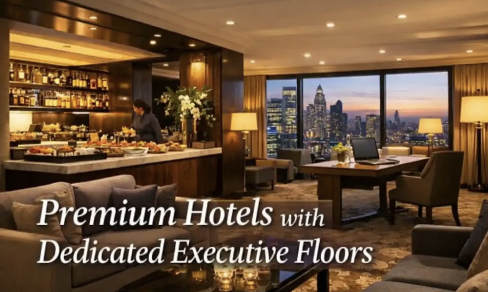
Premium Hotels with Dedicated Executive Floors
Premium hotels has changed. Not because travelers suddenly stopped loving marble bathrooms, skyline suites, or polished lobbies scented like rare flowers, but because the definition of value moved upward. High-net-worth guests, global executives, premium leisure travelers, and affluent families are no longer paying top rates just for a beautiful room. They are paying for time efficiency, privacy, service precision, and a feeling that the hotel understands them before they even speak.
That is exactly where premium hotels with dedicated executive floors have become a serious differentiator. These floors are not simply a cluster of better rooms hidden above the standard inventory. At their best, they function like a private ecosystem inside the hotel: quieter corridors, faster arrivals, elevated food and beverage access, better business support, more personalized concierge help, and a smoother experience from check-in to departure. In a market where luxury travelers want every moment to work harder for them, this matters.
Hilton’s 2025 travel trends report described 2025 as the year of the “travel maximizer,” with travelers wanting to “maximize every moment” of their time away, while Deloitte’s 2025 travel outlook said demand remains strong and that travel companies need to respond to AI, personalization, and changing international patterns. That combination explains why executive floors now sit at the intersection of luxury hospitality, premium business travel, wealth-driven tourism, and high-value guest experience design.
Why Executive Floors Matter More in Modern Luxury Travel
There was a time when an executive floor was seen mainly as a business-travel perk. It was the part of the hotel where road warriors grabbed coffee before meetings, printed documents, and escaped the noise of the lobby. That old picture is too small for today’s market. Modern executive floors now appeal to a much wider luxury audience because they solve a set of problems that premium travelers actually care about: overstimulation, wasted time, crowded breakfast rooms, impersonal service, and lack of seamless privacy.
Think of the main hotel as a glamorous city avenue and the executive floor as a private carriage lane running beside it. Both get you to the destination, but one feels controlled, intentional, and discreet. That difference becomes even more valuable when travelers mix work with leisure, travel with family, or extend trips for wellness and networking. Hilton noted the blending of work and play in its 2025 trends commentary, and McKinsey highlighted that current travel shifts include stronger preferences for both experiences and luxury travel.
Those two currents meet perfectly on executive floors, where a guest might spend the morning in a private meeting area, the afternoon taking a spa appointment, and the evening sipping cocktails with skyline views in a restricted lounge. This is not just an upgrade in room category. It is a redesign of friction. For international luxury travelers, friction is expensive. Missed time, lost quiet, slow service, and crowded amenities all reduce the perceived value of a premium hotel rate. Executive floors remove that drag and replace it with control, which is one of the most bankable forms of modern luxury.
Privacy Has Become a Premium Commodity
Luxury used to announce itself loudly. Bigger chandeliers, brighter gold, more visible extravagance. The new version often whispers. Privacy, calm, selective access, and discreet service now carry more weight than spectacle for many affluent travelers. That is one reason executive floors feel relevant instead of old-fashioned. Marriott’s description of executive lounges emphasizes private and exclusive access, quieter surroundings, limited eligibility, and a more secluded atmosphere away from busier common areas. That may sound simple, but in premium travel, simplicity is often the most expensive thing in the room.
A private breakfast corner where you do not queue behind a convention crowd is not a tiny convenience; it is emotional real estate. A lounge with generous spacing, attentive staff, and no chaos can turn a rushed trip into a composed one. For VIP travelers, celebrities, corporate leaders, wealth managers, luxury shoppers, family office clients, and top-tier loyalty members, the executive floor acts like a buffer zone between the public hotel and the private stay.
It gives them a softer landing. It also increases perceived security, which matters more than many hotel marketers admit. Travelers with high-value schedules, confidential calls, or visible profiles often want environments that reduce exposure without making the trip feel sterile. Executive floors do that elegantly. They create a hospitality version of a members-only club: present, polished, and protected. That is why they resonate so strongly with the luxury lifestyle, wealth travel, premium concierge, and exclusive accommodation keywords that attract higher-value advertising in the travel and finance space.
Business and Leisure No Longer Travel Separately (Premium Hotels)
One of the biggest mistakes in hotel marketing is assuming guests still fit neat categories. Business traveler. Leisure traveler. Family traveler. Wellness traveler. Reality is messier, and much more profitable. A corporate guest may arrive for investor meetings, stay through the weekend with a partner, request a spa reservation, need a private airport transfer, and host two client cocktails before departure. That is no longer unusual. Deloitte’s 2025 travel outlook points directly to AI-driven personalization and evolving international demand, while Hilton’s 2025 trends framing highlights the intersection of work and play.
Executive floors serve this blended traveler beautifully because they are flexible by design. The lounge works as a breakfast room, a coworking zone, an informal meeting point, and an early-evening social setting without forcing the guest to move through multiple public spaces. For a traveler managing time zones, confidential conversations, and high expectations, that flexibility becomes a premium amenity in itself. Even from a revenue perspective, the logic is strong. GBTA’s 2025 Business Travel Index Outlook describes business travel as a large, global, multi-industry ecosystem spanning 72 countries and 44 industries, which means hotels are competing for travelers whose value goes far beyond one-night room revenue.
They spend on dining, transport, meetings, loyalty programs, upgrades, and repeat stays. An executive floor helps capture that broader wallet while supporting the emotional side of luxury: less friction, more control, and a better rhythm to the trip. For premium hotels, that makes the executive floor less like an add-on and more like a high-margin service platform hidden in plain sight.
What Defines a True Executive Floor Experience (Premium Hotels)
Not every hotel that uses the words club level, executive floor, or lounge access delivers the same standard. Some properties offer a genuinely elevated stay; others offer little more than a better room and a few snacks behind a keycard door. The difference matters, especially for international luxury travelers who compare service standards across cities and brands. A true executive floor experience begins with structure. It should feel deliberately designed around convenience, exclusivity, and intuitive service. That means arrival should be smoother, staff should be more empowered, lounge benefits should be clearly valuable, and the physical space should encourage both productivity and relaxation. Marriott’s executive lounge guidance highlights private access, food and beverage offerings, business amenities, exclusive experiences, and dedicated concierge service.
Those pillars create a useful framework for judging any executive-floor booking. If the hotel gives you lounge access but no meaningful food program, no real work area, no dedicated support, and no atmosphere worth lingering in, then the executive promise is thin. If, on the other hand, the property offers a separate check-in flow, quality breakfast, evening cocktails, meeting support, faster assistance, strong Wi-Fi, elevated views, and staff who remember your preferences, the executive floor becomes something else entirely: a hospitality shortcut to high-function living. That is what premium travelers are buying. Not just square meters. Not just design. They are buying the compression of effort. In luxury hospitality, effort is the hidden tax. The best executive floors quietly refund it.
Elevated Check-In, Dedicated Concierge, and Club Lounge Access (Premium Hotels)
The strongest executive-floor experiences begin before the guest even reaches the room. Arrival sets the tone. When a premium traveler steps out of an airport transfer after a long-haul flight, the last thing they want is a slow front-desk queue, repeated questions, and generic directions. That is why dedicated check-in is such a powerful feature. The Ritz-Carlton Club Lounge description, for example, specifically mentions dedicated check-in, food and beverage, and personalized service.
Marriott’s executive lounge overview also points to personalized check-in and check-out as part of dedicated concierge support. These details may sound procedural, but luxury is often built from procedure done beautifully. Dedicated arrival reduces fatigue and signals hierarchy in the best sense: the guest feels recognized. Club lounge access then extends that recognition throughout the stay. Breakfast becomes faster and calmer. Afternoon refreshment becomes easy. Evening cocktails become a built-in ritual instead of another decision.
Concierge staff become less transactional and more relational, helping with restaurant bookings, transport coordination, and on-property requests with greater precision. For international guests, especially those navigating unfamiliar cities, this can save real money and a surprising amount of cognitive energy. Instead of repeatedly solving small travel puzzles, they move through a curated path. That is why lounge access is not just a loyalty perk.
It is a productivity tool, a comfort layer, and a luxury signal all at once. In terms of advertiser value, this is exactly the kind of environment connected to high-intent categories such as premium credit cards, private banking travel benefits, executive insurance, wealth management travel services, and luxury concierge memberships.
Design, Quietness, and Spatial Exclusivity (Premium Hotels)
The best executive floors are designed like a good tailored jacket: they look elegant from the outside, but their real value appears in the fit. Quiet corridors, controlled access, smart lounge layouts, subdued lighting, private seating clusters, integrated charging points, and views that feel cinematic rather than decorative all contribute to a sense of spatial privilege. Shangri-La Jakarta’s Horizon Club Room, for example, emphasizes higher-floor placement and skyline views while positioning the room for both business and leisure travelers.
That wording matters. It signals that executive-floor design is not about one use case anymore. It is about versatility wrapped in serenity. A luxury traveler may want to answer emails in silence at 7 a.m., hold a short strategy call at noon, change for dinner at 6 p.m., and decompress with tea while looking over the city at night. Public hotel spaces rarely support all of that equally well. Executive floors can. Quietness, especially, deserves more credit. In crowded premium hotels, noise is one of the fastest ways to erode perceived luxury.
It only takes one chaotic breakfast room or loud common area to make a five-star property feel ordinary. Executive floors help defend the emotional architecture of the stay. They preserve mood. They create a pacing mechanism that lets guests move between energy and calm without leaving the building. In a world where luxury travelers increasingly value control over showmanship, that kind of environment is not decorative. It is strategic. It supports premium wellness travel, elite business accommodation, VIP guest services, and high-end urban hospitality in one seamless package.
The Premium Facilities That Justify the Upgrade (Premium Hotels)
At some point every traveler asks the blunt question: is the executive-floor premium actually worth paying for? The answer depends on the facility mix, because true value comes from the stack of benefits rather than any single item. A good executive floor does not just add perks; it changes the economics of the stay. Complimentary breakfast in a lounge can offset daily dining costs. Evening cocktails and hors d’oeuvres can replace one restaurant outing.
Meeting-room access can save a business traveler from booking external workspace. Faster service can protect a full schedule. Marriott’s executive lounge materials mention complimentary bites and refreshments, workstations, Wi-Fi, power outlets, secluded spaces, audiovisual-equipped meeting rooms, and dedicated concierge help. Vinpearl Landmark 81’s Club Lounge in Ho Chi Minh adds tangible inclusions such as breakfast, hors d’oeuvres, cocktails, beer, wine, coffee, tea, desserts, free Wi-Fi, and business services, with hours running from morning to evening. When benefits are this concrete, the value equation becomes much easier to justify. The upgrade is no longer an abstract luxury premium.
It becomes a bundled services package hidden inside the room rate. For affluent travelers, that bundle also reduces decision fatigue. Instead of constantly asking what to eat, where to sit, where to work, or where to meet, they already have a reliable base inside the property. That reliability is one of the quiet reasons premium guests return to executive-floor products. The room may attract them once. The rhythm of the stay brings them back.
A Practical Comparison of Executive Floor Value (Premium Hotels)
| Feature | Standard Premium Room | Executive Floor / Club Level | Why It Matters |
|---|---|---|---|
| Check-in experience | Main front desk | Dedicated or priority check-in | Saves time and reduces arrival friction |
| Breakfast | Restaurant, often crowded | Lounge breakfast, calmer setting | Better privacy and a faster morning routine |
| Drinks & snacks | Paid separately | Often included through the day | Improves value and convenience |
| Workspace | In-room desk or lobby | Lounge work areas and meeting support | Useful for premium business travel |
| Concierge help | General concierge queue | More personalized assistance | Better restaurant, transfer, and VIP planning |
| Atmosphere | Shared with all guests | Restricted, quieter, more exclusive | Stronger luxury perception |
| Social setting | Public bars and restaurants | Curated lounge interaction | Better for discreet networking |
| Overall value | Room-focused | Experience-focused | Converts rate premium into service premium |
That table tells the story quickly, but the deeper point is this: executive floors turn passive room revenue into active guest engagement. A standard premium room can be beautiful and still feel static. An executive-floor stay feels dynamic because it keeps generating value throughout the day. That is why hotels with well-run club floors often perform better with high-frequency travelers and premium loyalty segments. Guests are not paying simply to sleep higher up the building. They are paying to live more smoothly inside it. For luxury lifestyle audiences, that smoothness is the product. It is the difference between staying in a hotel and being carried by it.
Wellness, Security, and Personalized In-Room Comfort
Luxury travelers do not experience value only through visible perks. They also experience it through what does not go wrong. No stress at breakfast. That no scramble for a quiet seat. No confusion about services. No sense of being processed. That is why wellness and security, even when they are not marketed loudly, are part of the executive-floor proposition. Higher floors can feel calmer and more removed from lobby traffic. Restricted lounge access can create a more controlled environment. Dedicated teams can respond faster to special requests, dietary needs, pressing services, transport timing, and room preferences.
Shangri-La’s Horizon Club language around exclusive privileges, personalized services, and suitability for both leisure and business travelers reflects exactly that kind of layered comfort. In practice, it means the guest feels looked after without being interrupted. Personalized in-room comfort also matters more than people admit. The right pillow setup, faster housekeeping coordination, efficient garment pressing, priority luggage handling, and a smoother checkout process can dramatically improve short luxury stays where every hour counts.
Executive-floor products often act as amplifiers for these small but crucial service details. That is where many hotels either win loyalty or lose it. Travelers remember the property that anticipated needs before they became chores. In a premium segment tied to luxury travel insurance, private transfer services, premium financial audiences, and affluent global mobility, these details help justify premium pricing while keeping the brand aligned with exclusivity rather than excess. The experience feels elevated not because it is louder, but because it is more intelligently composed.
Who Benefits Most from Booking Executive Floors (Premium Hotels)
The best executive-floor booking decisions happen when a traveler matches the product to the purpose of the trip. Not everyone needs club access every time. But some travelers gain outsized value from it, and recognizing that is where smart luxury spending begins. International business travelers are the most obvious fit, especially those with dense schedules, cross-border calls, or short stays in major financial cities. For them, lounge breakfast, discreet seating, and reliable concierge help are not indulgences.
They are operational advantages. Families in premium leisure segments can also benefit more than expected, especially when parents want a calmer meal environment, extra service support, and easier access to refreshments throughout the day. VIP travelers, loyalty elites, wedding guests, diplomatic visitors, investors, and premium event attendees also gain from the added privacy and more curated service tempo. The real test is simple: if your time is expensive, your expectations are high, or your trip combines multiple purposes, an executive floor often makes financial and emotional sense. T
his is particularly true as Asia continues to matter more in global travel flows. Amadeus’ 2025 travel trends report says Asia-Pacific will account for 50% of global air passenger growth over the next 15 years, and it highlights renewed energy in Asian inbound and outbound travel. That matters because many of the world’s most compelling executive-floor products are concentrated in gateway cities and premium destinations across Asia. For international luxury travelers moving through those markets, executive floors are increasingly less of a niche and more of a smart default.
International Business Travelers (Premium Hotels)
For the international business traveler, the executive floor is often the closest thing a hotel can offer to a portable headquarters. The guest may be landing from another continent, taking investor meetings within hours, handling confidential documents, and needing a polished environment that supports focus without feeling clinical. Public hotel spaces are often too exposed or unpredictable for that. Lounges, by contrast, offer a semi-private middle ground between the room and the lobby.
Marriott’s executive lounge description specifically references high-speed Wi-Fi, power outlets, workstations, secluded spaces, and private meeting rooms with audiovisual equipment. Those features turn the lounge into an operational asset. That matters in a business-travel ecosystem as large and complex as the one GBTA outlines in its 2025 forecast. When corporate travel spend is measured at a global scale and across dozens of industries, hotels are not just selling beds to executives; they are supporting deal-making, client relationships, and decision-making environments. An executive floor can influence whether a guest feels prepared, calm, and productive during a demanding trip. It can even affect where a company prefers to place senior travelers in future.
That is why premium hotels should never market executive floors only with generic words like “access” and “comfort.” They should market them as performance spaces for high-value travel. For the traveler, the decision is simple: if a trip carries strategic importance, the executive floor is not a splurge. It is risk management disguised as hospitality.
Luxury Leisure Guests, Families, and VIP Travelers (Premium Hotels)
There is also a common myth that club floors are too corporate for leisure. That idea falls apart the minute you watch a couple enjoy sunset cocktails above a skyline, a family avoid crowded breakfast service, or a VIP guest glide through check-in without fanfare. Executive floors fit leisure beautifully when the guest values ease, privacy, and a curated pace. A luxury leisure traveler may spend on spa treatments, fine dining, premium retail, and private tours, but still deeply appreciate the simple elegance of a quieter breakfast or a dedicated concierge who can secure a last-minute table.
Families benefit because lounge access can reduce daily friction around food and downtime. VIP travelers benefit because the semi-private environment shields them from unnecessary exposure while maintaining warmth. The Ritz-Carlton’s club-level framing around dedicated check-in, personalized service, and food and beverage is a perfect example of why the format works beyond corporate travel. It creates a seamless cocoon around the guest.
And in a premium-travel market increasingly shaped by experience, that cocoon becomes emotionally valuable. It helps the hotel feel less like a transaction and more like a host. For affluent international travelers, especially those booking milestone trips, shopping weekends, wellness escapes, or hybrid city stays, the executive floor can turn a strong hotel into the right hotel. That difference is where genuine loyalty begins.
Real-World Hotel Examples That Set the Standard (Premium Hotels)
Real examples matter because they move executive floors out of theory and into something you can visualize and book. Shangri-La Jakarta positions its Horizon Club Room on higher floors with skyline or pool views and describes the offering as suitable for both business and leisure travelers, anchored by exclusive privileges and personalized service. That is the classic club-floor formula done well: elevated location, flexible purpose, and a clear promise of refinement.
Vinpearl Landmark 81, Autograph Collection in Ho Chi Minh provides one of the most specific examples. Its Club Lounge is described as Vietnam’s highest, with complimentary snacks, drinks, evening cocktails, breakfast hours, hors d’oeuvres, and business services. This is exactly the kind of executive-floor proposition that feels tangible to a traveler deciding whether the premium is worth it. The benefits are not vague. They are visible across the day.
The Ritz-Carlton Club Lounge takes a slightly different tone, emphasizing dedicated check-in, food and beverage, and personalized service. That framing aligns perfectly with the brand’s heritage: high-touch hospitality delivered with restraint. Across all three examples, the pattern is consistent. The executive floor works when it provides a private rhythm, not just a better view. It needs to support arrival, dining, work, service, and mood in one coherent layer. That is what travelers should be looking for. Not the label alone, but the structure behind it. A hotel can call anything “executive.” The smart luxury traveler checks whether the experience actually behaves that way.
Choosing the Right Executive Floor Without Wasting Money
Booking executive-floor accommodation intelligently is less about chasing prestige and more about reading the value architecture of the stay. Start with inclusions. Does the lounge offer full breakfast, substantial evening canapés, alcoholic beverages, meeting support, private check-in, and meaningful concierge help? Or is it mostly coffee and branding? Then look at trip pattern. If you will be out all day and barely touch the lounge, the rate premium may not make sense. If you have a dense schedule, arrive early, depart late, host informal meetings, or want a quieter base, the executive floor becomes more compelling.
Also check access rules carefully. Marriott notes that lounge benefits can vary by property and eligibility, and some hotels offer access through elite status while others tie it directly to room type. That detail can materially change the value calculation. Another useful lens is time savings. Ask whether the executive-floor product will save enough time and decision-making effort to justify the higher rate. For many international luxury travelers, the answer is yes.
Time saved at arrival, breakfast, meetings, and evening planning can be worth more than the difference in room price. The smartest bookings happen when travelers compare the executive floor not only to the standard room, but also to the total likely spend on food, workspace, convenience, and service requests. Once you do that, the premium often looks less like a luxury surcharge and more like a bundled efficiency package. In elite travel, efficiency is not the opposite of indulgence. It is indulgence, just in a sharper suit.
Why Executive Floors Are a Smart Asset for Premium Travel Brands
From the hotel brand’s perspective, executive floors are not just a guest amenity. They are a revenue and positioning tool. They help attract travelers with higher total spend, greater loyalty potential, and stronger alignment with premium brand ecosystems such as luxury cards, airline elites, private transfers, fine dining, executive wellness, and wealth-oriented travel services. That also give hotels a powerful way to segment value without discounting the broader property.
Instead of competing only on room price, a hotel can compete on layered access and elevated service. That matters in a world where strong travel demand continues but guest expectations are getting more complex. Deloitte’s 2025 outlook points to strong demand alongside the need to respond to AI, international shifts, and expanded offerings. Executive floors fit that environment because they are inherently customizable. They can serve loyalty members, premium-paid guests, C-suite travelers, celebratory leisure visitors, and long-stay international guests without requiring a completely separate hotel concept.
They also support brand equity. When a guest has a deeply smooth club-floor experience, they are more likely to associate the hotel with intelligence rather than just style. That creates stickier loyalty. McKinsey’s identification of luxury and experiences as central travel trends reinforces the same point. Executive floors succeed because they package both at once: an elevated experience delivered in a premium hospitality context. For hotels targeting the top end of global travel demand, that is not a side strategy. It is one of the clearest ways to turn service into margin and privacy into brand power.
Conclusion (Premium Hotels)
Premium hotels with dedicated executive floors have become far more than a legacy corporate perk. They now represent one of the clearest expressions of modern luxury hospitality: quiet access, faster service, higher privacy, better food and beverage value, stronger business functionality, and a more controlled emotional rhythm to the stay.
For international luxury travelers, that combination is powerful because it answers the real question behind premium travel spending: not “How grand is the room?” but “How well does this hotel carry me?” The best executive floors carry the guest beautifully. They reduce friction, support status without noise, and create a private layer of hospitality inside a public property. That is why they appeal to everyone from global executives to affluent leisure couples and VIP families. In a travel market shaped by experience, personalization, and efficient luxury, the executive floor is no longer a nice extra. It is often the smartest place in the hotel to be.