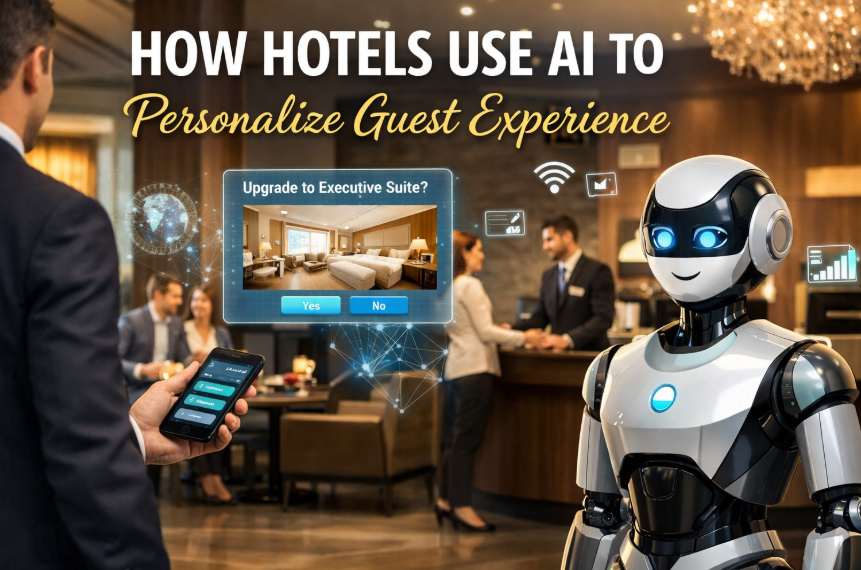
Hotels are entering a new era where AI personalization isn’t a “nice-to-have” feature—it’s becoming the competitive advantage that wins bookings, boosts direct revenue, and turns first-time visitors into loyal repeat guests. Think about it: guests don’t compare your hotel only to other hotels anymore. They compare your experience to the instant recommendations they get from streaming platforms, online shopping, and even food delivery apps.
So the big question is simple: How do hotels use AI to personalize guest experience in a way that feels natural, premium, and profitable—without being weird or invasive? Let’s break it down step by step, in plain English, with clear examples and practical takeaways.
Why AI Personalization in Hotels Is Exploding Right Now
AI personalization in hospitality is rising fast because guest expectations are rising even faster. Every traveler now expects a frictionless booking process, a customized stay, and a high-value experience that matches their lifestyle, budget, and travel purpose. When a hotel uses machine learning, predictive analytics, and real-time guest messaging, the result feels like a concierge who already “gets you” before you even check in.
At the same time, hotels finally have the right tools to unify guest data across channels. A modern hotel can connect reservation systems, CRM platforms, loyalty programs, mobile apps, and guest feedback into one data engine. With that connected data, AI can deliver personalized hotel offers, targeted upsells, and tailored recommendations that improve both guest satisfaction and hotel profitability.
The “expectation gap” guests bring from Netflix, Amazon, and ride-hailing
Guests are trained by tech platforms to expect relevant suggestions instantly. If Netflix can predict what you’ll watch, guests wonder why a hotel can’t predict the pillow type they like or the breakfast they prefer. That expectation gap is exactly where AI-driven hospitality shines—because AI makes personalization scalable, consistent, and fast.
Hotel data is finally usable (and valuable)
The real gold is not “more data.” The real gold is usable data—clean, structured, and connected. When hotels organize data properly, AI can interpret patterns and generate action: upgrades, amenities, timing, and service priorities. That’s when personalization stops being a dream and becomes a daily operation.
The Data Hotels Use to Build Personalized Guest Profiles
AI in hotels starts with one key ingredient: a guest profile that is accurate, consent-based, and useful. This isn’t about spying. This is about collecting and using information guests already share—like room preferences, travel purpose, and service needs—to create a more comfortable stay. With the right hotel CRM and AI analytics, a hotel can deliver personalized guest journeys from booking to checkout.
Hotels use data from multiple touchpoints to build these profiles: booking engines, front desk interactions, loyalty programs, mobile apps, feedback forms, Wi-Fi portals, and in-room systems. When AI merges these signals, it can recommend the right room setup, the best dining times, and the most relevant add-ons—without requiring the guest to repeat the same request five times.
Booking data and reservation preferences
Booking data reveals powerful signals like stay dates, number of guests, room category, special requests, and lead time. AI can use this to predict whether a guest is traveling for business, a honeymoon, a family trip, or a weekend getaway. That prediction helps hotels offer the right package: airport transfer, late checkout, kids’ amenities, or meeting room access.
Loyalty data and guest history
Loyalty data is personalization fuel because it shows what a guest loved before. If a repeat guest always books high floors, prefers quiet rooms, and uses the gym early, the hotel can proactively match those preferences. AI can also detect churn risk and trigger a targeted retention offer that increases repeat bookings.
On-property behavior and real-time signals
Real-time signals can include app activity, service requests, housekeeping timing, restaurant reservations, or spa browsing. AI can turn these actions into personalized recommendations—like suggesting a massage slot after a long flight or offering a curated dinner reservation when a guest opens the dining page.
What “zero-party data” means for hotels
Zero-party data is information guests willingly provide, like “I prefer a firm mattress” or “I’m celebrating an anniversary.” This is the most valuable type of data because it’s accurate, intentional, and privacy-friendly. Smart hotels use simple preference prompts during booking or mobile check-in to collect it.
AI-Powered Recommendations That Feel Like a Human Concierge
A great concierge feels like a mind reader—but a respectful one. That’s exactly what AI aims to replicate at scale: personalized suggestions that feel thoughtful, relevant, and timely. AI recommendation engines in hospitality can propose room features, dining options, local attractions, and on-property experiences based on guest profiles and travel context.
The key is “context.” AI is strongest when it combines guest preferences with real-time factors like weather, occupancy, seasonality, and event schedules. That’s how you move from generic suggestions like “Try the spa” to premium suggestions like “You’ve had a long travel day—our 30-minute recovery massage has an opening at 6:30 PM, and we can deliver herbal tea to your room after.”
Personalized room selection and upgrade offers
AI can predict which guests are most likely to accept upgrades and what type of upgrade matters. Some guests want ocean views. Others want lounge access, larger bathrooms, or quieter corners. By matching upgrade offers to real preferences, hotels increase conversion and reduce wasted offers.
Curated dining, spa, and activity suggestions
AI can personalize dining by suggesting cuisine types, time slots, or dietary-friendly menus. It can also recommend local experiences that match a guest’s style—art galleries for culture lovers, private yacht tours for luxury travelers, or kids-friendly attractions for families.
Micro-moments: the small details that drive big satisfaction
Micro-moments are tiny wins that feel huge: remembering a guest’s favorite drink, preparing an extra towel without being asked, or suggesting a late checkout before the guest requests it. AI helps hotels identify these moments and deliver them consistently.
Smart Pricing and Personal Offers That Increase Revenue
Hotels have always used dynamic pricing, but AI pushes it further by making pricing smarter and offers more relevant. The goal is not to “charge different prices to different people.” The goal is to deliver the best value package for the guest’s needs while improving revenue per guest. AI can analyze booking patterns, demand forecasts, competitor pricing signals, and guest behavior to create high-converting hotel offers.
Personalization also improves direct bookings. When guests see a tailored bundle—like breakfast + airport transfer + late checkout—many will book direct instead of going through third-party platforms. That improves margins, strengthens loyalty, and gives the hotel more control over the relationship.
Dynamic pricing vs. personalized pricing
Dynamic pricing changes based on demand, time, and market conditions. Personalized pricing is about tailoring the offer structure, not just the number. A business traveler might value flexible cancellation and express check-in, while a leisure traveler might value spa credits and dining discounts.
AI-driven upsell and cross-sell bundles
AI can build bundles that make sense. Instead of pushing random add-ons, the system can offer packages that match behavior: a gym-focused guest gets wellness perks, while a family gets kids meals and connecting rooms.
How to avoid “creepy” personalization
Creepy personalization happens when a guest feels watched. The fix is simple: focus on preference-based personalization, use transparency, and give easy opt-outs. Personalization should feel like service, not surveillance.
Chatbots, Virtual Concierges, and 24/7 Guest Messaging
One of the most visible uses of AI in hotels is the rise of chatbots and virtual concierges. These tools deliver instant responses, reduce front-desk overload, and improve guest satisfaction by solving problems faster. A well-designed hotel chatbot can handle FAQs, booking modifications, check-in instructions, local recommendations, and service requests—without forcing guests to call or wait.
But the real value is consistency. AI messaging can maintain a professional brand tone across languages and time zones. It can also personalize replies, so the experience feels helpful rather than robotic. When AI understands guest intent, it can route complex issues to human staff while still making the guest feel supported.
Instant answers that reduce front-desk pressure
The best guest experience is a fast guest experience. If a guest asks for extra pillows at 11 PM, a chatbot can take the request instantly and dispatch the task to housekeeping or night staff. That reduces friction and keeps reviews positive.
Multilingual support for global travelers
Multilingual AI support is a major advantage for hotels serving international guests. Guests can ask questions in their preferred language and get accurate answers quickly, which reduces misunderstandings and increases comfort.
When AI should hand off to humans
AI should handle routine tasks, but humans should handle emotional or complex situations—like service recovery, billing disputes, or medical requests. The best hotel AI systems are designed for seamless human handoff.
AI in the Room: Smart Rooms That Adapt to Each Guest
Smart rooms are where AI personalization becomes physical. Instead of being a “cool gadget,” smart room technology can improve sleep quality, comfort, and convenience. AI-enabled room systems can learn guest preferences—temperature, lighting, curtain timing, and entertainment choices—so the room feels familiar, even if it’s the guest’s first stay.
For luxury hotels, smart rooms can create that “wow” feeling without extra staff time. For business hotels, smart rooms reduce friction and boost productivity. Either way, the goal is the same: a room that adapts like a tailored suit instead of fitting like a one-size-fits-all T-shirt.
Lighting, temperature, and entertainment personalization
AI can suggest a sleep-friendly temperature, adjust lighting based on time of day, and recommend entertainment options based on guest preferences. This kind of comfort personalization increases satisfaction and reduces complaints.
Voice assistants and privacy-first controls
Voice assistants can make it easier to request services, control room settings, or ask for information. But privacy must be the priority, so hotels should provide clear controls, data minimization, and optional use.
Smart room ROI for luxury and business hotels
Smart rooms can reduce energy waste, improve maintenance efficiency, and increase premium room value. The ROI comes from both cost savings and higher revenue per occupied room.
AI for Operations: Faster Service, Fewer Errors, Happier Guests
AI personalization isn’t only guest-facing. Behind the scenes, AI improves the speed and quality of service delivery. When operations run smoothly, guests feel it—even if they never see the technology. AI can predict housekeeping needs, detect maintenance issues early, and optimize staffing to reduce wait times.
Think of operations AI like a backstage crew in a theater. If the backstage crew is organized, the show feels effortless. If the backstage crew is chaotic, guests notice every delay, every mistake, and every missing detail.
Predictive housekeeping and maintenance
AI can predict which rooms need priority cleaning based on check-out times, arrivals, and housekeeping capacity. It can also detect patterns that signal maintenance issues—like repeated AC complaints—before a bigger problem occurs.
Staffing optimization and queue reduction
AI can forecast peak times for check-in, breakfast, and concierge requests, helping hotels schedule staff efficiently. This reduces lines, improves service speed, and protects online ratings.
Service recovery before complaints happen
AI can detect risk signals like negative sentiment in messages, repeated service requests, or unusual delays. That allows staff to intervene early—often turning a potential bad review into a positive story.
AI in Food & Beverage: Personalized Dining at Scale
Food is emotional. Dining is memory. That’s why AI personalization in hotel F&B can be a massive brand advantage. AI can support dietary needs, personalize menus, recommend pairings, and improve ordering convenience. It can also optimize inventory and reduce waste—improving profitability without cutting quality.
When a guest feels “seen” at breakfast—like their allergy is respected, their favorite coffee is remembered, and their preferred table is offered—they feel cared for. And care is the currency of hospitality.
Menu personalization and allergy safety
AI can flag allergies, dietary preferences, and ingredient restrictions, ensuring safer dining experiences. It can also recommend dishes that match preferences like vegetarian, halal, gluten-free, or low-sugar.
Demand forecasting and waste reduction
AI forecasting predicts how many guests will dine, what they’ll likely order, and what inventory is needed. That reduces food waste and improves cost control.
Room-service personalization that feels premium
AI can suggest add-ons that match guest preferences—like a dessert pairing or a healthier side option—making room service feel like a curated experience.
AI Security, Fraud Detection, and Safer Guest Journeys
Safety is a hidden luxury. Guests want security, but they don’t want to feel like they’re in an airport checkpoint. AI helps hotels balance both. It can detect booking fraud, prevent payment risks, and identify unusual access patterns—without interrupting the guest experience.
Security AI also supports brand reputation. A single fraud incident or data breach can damage trust for years. Strong AI-powered security reduces risk while maintaining a smooth experience.
Payment security and booking fraud prevention
AI can detect suspicious booking patterns, unusual payment activity, and risky transactions. It can flag issues early, reducing chargebacks and financial loss.
Access control and anomaly detection
AI can support smart access systems by detecting unusual activity patterns. For example, repeated failed access attempts or unexpected movement patterns can trigger staff checks.
Balancing safety with guest comfort
Security should be quiet and effective. Hotels can use AI as a “silent guard”—strong enough to protect, subtle enough to preserve comfort.
Privacy, Consent, and Compliance in Hotel AI
Personalization only works when trust is strong. If guests don’t trust your data practices, personalization becomes a liability. That’s why privacy, consent, and compliance must be foundational. Hotels should clearly communicate what data is collected, why it’s collected, how it’s protected, and how guests can control it.
A privacy-first approach is also a marketing advantage. Guests increasingly choose brands that respect data and transparency. The most successful hotels treat privacy like luxury: calm, clear, and protective.
Data minimization and transparent consent
Hotels should collect only what they need and get clear consent for personalization. Simple preference questions and opt-in toggles can be more effective than hidden data collection.
AI ethics, bias, and brand trust
AI must be monitored for fairness. If AI offers better perks only to certain segments in unfair ways, trust erodes. Hotels should audit personalization rules and keep humans involved.
Practical “privacy-by-design” checklist
A strong checklist includes: opt-in personalization, easy opt-out, data retention limits, secure storage, role-based access, and clear guest communication.
Implementation Roadmap: How Hotels Can Start Without Overbuilding
Implementing hotel AI doesn’t have to be overwhelming. The smartest approach is to start with high-impact, low-risk use cases and build from there. Hotels that win with AI typically focus on three phases: quick wins, mid-term improvements, and long-term transformation.
Think of it like renovating a hotel lobby. You don’t tear down the entire building on day one. You start with the upgrades that guests feel immediately—then expand intelligently.
Quick wins (30–60 days)
Start with AI chat for FAQs, a basic guest preference form at booking, and automated upsell offers that match stay type. These deliver immediate benefits with minimal disruption.
Mid-term upgrades (3–6 months)
Next, integrate CRM and PMS data, add AI-driven segmentation for email marketing, and implement operational forecasting for housekeeping and staffing.
Long-term transformation (6–18 months)
Finally, evolve toward smart rooms, advanced recommendation engines, and real-time personalization across the full guest journey.
KPIs to track ROI and guest satisfaction
Track conversion rate for upsells, direct booking share, guest satisfaction scores, response time, complaint reduction, and repeat guest rate. If the KPIs improve, the AI strategy is working.
The Future of AI Personalization in Hospitality
The future of hospitality is moving toward real-time, context-aware personalization—where hotels act like intelligent hosts. AI will become less visible but more powerful, coordinating services quietly in the background while humans focus on warmth and emotional connection.
The winning hotels won’t be the ones with the most AI. They’ll be the ones with the best balance: smart automation + human hospitality. AI will handle the logistics, and humans will deliver the magic.
Hyper-personalization with real-time context
AI will personalize based on mood, schedule, and context—like adjusting room environment after long travel, or suggesting quieter dining options after a meeting day.
AI agents coordinating travel end-to-end
We’ll see AI agents coordinating flights, transfers, hotel preferences, and experiences in one flow—reducing friction and improving trip quality.
Why “human warmth” will matter more than ever
As AI becomes common, human warmth becomes rare—and therefore valuable. The best hotels will use AI to free staff time, so staff can deliver genuine care.
Conclusion
AI is changing hospitality in a very practical way: it helps hotels deliver personalized guest experiences that feel smoother, faster, and more thoughtful. From AI-powered recommendations and smart room personalization to operational efficiency and privacy-first guest profiles, the best hotel AI strategies focus on one goal—making guests feel understood without feeling watched. When hotels use AI responsibly, personalization becomes a premium advantage that boosts guest satisfaction, increases direct revenue, and strengthens brand loyalty for the long term.
FAQs
1) How does AI help hotels personalize guest experience?
AI helps hotels personalize the guest experience by analyzing preferences, booking behavior, and real-time requests to offer tailored rooms, services, upgrades, and recommendations.
2) Are hotel AI chatbots actually helpful for guests?
Yes, hotel AI chatbots are helpful because they provide instant answers, 24/7 service, faster request handling, and multilingual support that improves guest convenience.
3) What is the biggest benefit of AI personalization for hotels?
The biggest benefit is higher revenue and better reviews, because personalized offers increase upsell conversion while tailored service increases guest satisfaction.
4) Is AI personalization in hotels safe for privacy?
It can be safe when hotels use consent, data minimization, encryption, and clear opt-out options, creating a privacy-first personalization strategy.
5) What’s the best way for a hotel to start using AI?
The best way is to begin with quick wins like guest messaging automation, preference capture at booking, and AI-driven upsell offers, then expand to CRM integration and smart operations.
Read More