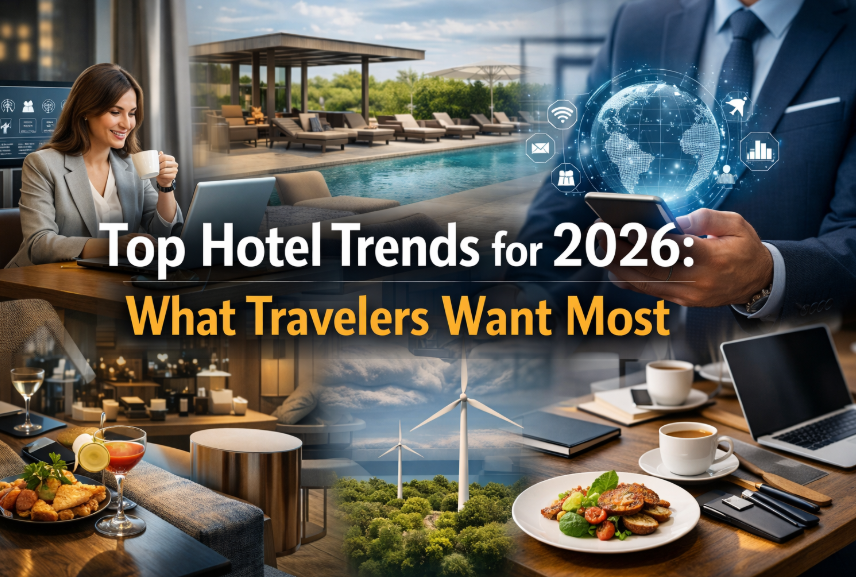
If hotels were movies, 2026 is the sequel everyone’s been waiting for—the one that’s smarter, calmer, and way more satisfying. Travelers aren’t just hunting for “a place to sleep” anymore. They’re searching for better hotel experiences, premium comfort, trusted service, and high-value amenities that match how life actually feels in 2026: fast, noisy, and a little overwhelming. So when people finally check in, they want the hotel stay to feel like a deep exhale.
And here’s the fun part: the “best hotel trends 2026” aren’t only about luxury hotels. Budget hotels, boutique hotels, resort hotels, and business hotels are all changing in the same direction—more personalization, more wellness, more sustainability, and more tech that works without feeling like a robot moved into your room. Let’s break down exactly what travelers want most, and why these hotel trends are becoming the new standard.
Why 2026 Will Feel Like a “Reset Year” for Hotels
Travelers in 2026 are booking with a different brain than they did a few years ago. They’re more intentional, more value-focused, and way more aware of what makes a hotel stay worth the money. The keyword here is trust—trust in cleanliness, trust in reviews, trust in service consistency, and trust that the hotel experience matches the photos. In a world full of filters and hype, authentic hotel experiences have become a powerful selling point, and hotels that deliver real value are the ones winning repeat bookings.
At the same time, travelers are craving comfort-driven hospitality the way people crave comfort food. Think of it like this: if travel is the adventure, the hotel is the safety net. Guests want high-quality beds, quiet rooms, smart lighting, temperature control, and easy check-in—not because they’re picky, but because they’re tired. Hotels that build around comfort, calm, and convenience will dominate the 2026 travel market, because they’re not selling rooms—they’re selling relief.
Experience-First Stays Are Replacing “Room-First” Bookings
In 2026, more travelers are choosing hotels the way people choose a restaurant: “What’s the vibe? What can I do there? Will it feel memorable?” That’s why experience-first hotels are exploding. Guests want curated hotel experiences, local cultural activities, well-planned day trips, and on-site experiences that make the stay feel like a mini vacation even if they never leave the property. The hotel is no longer just the base camp—it’s part of the adventure.
And here’s why advertisers love this trend: experience sells upgrades. When hotels package private tours, wellness workshops, chef-led tastings, or local art experiences, travelers are more likely to spend on premium rooms, add-ons, and longer stays. It’s like turning a simple hotel booking into a story worth telling. In 2026, the best hotels won’t compete only on price—they’ll compete on unique experiences, social-proof moments, and high-conversion travel value.
Smart Rooms That Actually Feel Smart
Tech is everywhere, but travelers are done with complicated hotel gadgets that feel like a science project. The top hotel technology trend for 2026 is simple: smart rooms that reduce friction. People want mobile key access, fast Wi-Fi, smart TV streaming, USB-C charging, and instant room controls that work the first time. No one wants to wrestle a thermostat like it’s a puzzle box. If the tech feels invisible and helpful, guests love it.
What’s really driving demand is the need for personal control. Travelers want to control lighting, temperature, curtains, and privacy with minimal effort. A smart hotel room in 2026 is like a well-trained assistant: quiet, fast, and never annoying. Hotels that invest in smart automation, energy-efficient controls, and seamless in-room tech also benefit from better sustainability scores and lower operational costs, which makes this trend a win for both guests and owners.
Hyper-Personalization Powered by AI
Guests in 2026 expect hotels to remember them the way your favorite café remembers your coffee order. The biggest shift is AI-driven personalization that feels human, not creepy. Travelers want room preferences, pillow choices, floor requests, and welcome amenities aligned with their habits. If a hotel can remember that you like a quiet corner room, extra towels, and late checkout, you’re already halfway to becoming a loyal guest.
This is where hotel CRM systems, loyalty data, and personalized offers become pure gold. Personalized deals like “upgrade to ocean view,” “free breakfast package,” or “spa credit for repeat guests” convert better because they feel relevant. And in 2026, relevance is everything. The hotels that win won’t be the loudest—they’ll be the most accurate. When personalization is done right, it feels like hospitality, not marketing.
Wellness Travel Goes Beyond the Spa
Wellness in 2026 isn’t just a spa appointment and a cucumber water station. Travelers want holistic wellness hotels that help them sleep deeper, move better, and feel calmer. Expect to see more sleep tourism, recovery-focused amenities, and wellness programs built into the hotel experience. Guests are actively searching for wellness suites, quiet floors, soundproof rooms, and circadian lighting because good sleep is now a premium travel benefit.
What’s interesting is that wellness is becoming mainstream. You don’t have to book a luxury retreat to want a hotel room with a great mattress, blackout curtains, a calm scent, and a high-quality shower. Hotels are adding in-room fitness gear, guided meditation content, healthy minibar options, and spa-like bathrooms because travelers are tired of returning home from vacation needing another vacation. In 2026, the best hotels won’t just refresh your towels—they’ll refresh your nervous system.
Sustainable Luxury Is Becoming Non-Negotiable
Sustainability used to be a “nice-to-have.” In 2026, it’s a booking factor. Travelers want eco-friendly hotels that still feel premium, and they can spot greenwashing from a mile away. Guests are looking for plastic-free amenities, refillable bathroom products, energy-efficient systems, responsible sourcing, and local community support. The trend is clear: sustainability isn’t about sacrifice anymore—it’s about smarter comfort.
And yes, sustainable luxury is real. Think high-end natural materials, better air quality, locally crafted décor, and seasonal dining that tastes fresher because it is fresher. Hotels that invest in LEED-friendly design, water-saving technology, and waste reduction also create a stronger brand story—one that attracts high-value travelers and premium advertisers. In 2026, sustainability is not a feature. It’s reputation.
Bleisure 2.0—Work Travel That Doesn’t Feel Like Work
The work-from-anywhere mindset is shaping hotel trends for 2026 in a big way. Travelers want bleisure hotels—properties designed for both productivity and rest. That means ergonomic desks, quiet work zones, soundproofing, reliable high-speed Wi-Fi, and great coffee that doesn’t taste like regret. People aren’t just asking, “Can I work here?” They’re asking, “Can I do my best work here?”
But here’s the twist: bleisure travelers also want lifestyle. They want coworking vibes in the morning and pool vibes in the afternoon. Hotels are responding with hybrid lobbies, collaboration lounges, private meeting pods, and flexible day-use rooms. In 2026, a hotel that supports work and wellness is a travel cheat code. It turns a business trip into a mini reset, and that’s exactly what modern travelers are buying.
The Rise of “Quiet Luxury” and Privacy-First Properties
Loud luxury is out. Quiet luxury is in. In 2026, travelers are craving privacy-first hotels with discreet service, calming design, and less “look at me” energy. Think boutique villas, hidden courtyards, private plunge pools, and low-traffic layouts. Guests want to feel protected from the chaos of the world, and private hotel experiences are now one of the most powerful premium selling points.
This is also why features like private check-in, in-room dining upgrades, exclusive club lounges, and members-only floors are becoming more popular. Privacy isn’t just about celebrities anymore—it’s about mental space. In 2026, privacy is like a luxury blanket: you don’t realize how much you need it until you finally have it.
Food, Not Just Breakfast—Hotels as Culinary Brands
In 2026, travelers are choosing hotels based on food the way they choose destinations based on culture. Hotels are becoming culinary brands, not just places with a restaurant. Guests want local-first dining, chef partnerships, farm-to-table menus, and signature experiences like tasting menus, rooftop dinners, and cooking classes. When food is a highlight, the whole stay feels more valuable—and the reviews get better too.
Another big trend is mindful indulgence: more zero-proof cocktails, wellness-friendly menus, and diet-inclusive options that don’t feel boring. Guests want healthy choices that still taste like vacation. Hotels that treat dining as part of the travel story will win more bookings, more social shares, and more return visits. Because let’s be honest—people forget the thread count, but they remember the meal.
Design Trends: Warm Minimalism and “Home That Travels”
Hotel design in 2026 is shifting away from cold minimalism and into warm minimalism—spaces that feel clean but not empty, stylish but not sterile. Travelers want rooms that feel like a better version of home: soft textures, warm lighting, natural wood, calming colors, and thoughtful layout. The goal is simple: reduce visual noise and increase comfort. In a world of constant stimulation, calm design is a competitive advantage.
At the same time, hotels still need to be photogenic. The 2026 design sweet spot is “Instagrammable but livable.” Guests want spaces that look great in photos but feel even better in real life. Hotels that nail boutique aesthetics, functional design, and comfort-first interiors will attract the travelers who leave detailed reviews and return every year.
Flexible Pricing, Memberships, and Subscription Stays
Travelers want more value, but they also want clarity. In 2026, hotels are leaning into flexible pricing models, memberships, and subscription-style perks to keep guests coming back. Think benefits like free upgrades, priority check-in, late checkout, breakfast credits, and exclusive rates. The trend is moving from “points that take forever” to “perks you feel immediately.”
This is great for travelers because it reduces booking stress and increases confidence. It’s also great for hotels because it builds predictable revenue and stronger loyalty. In 2026, the best loyalty programs will feel like a VIP shortcut, not a long math problem. If it’s simple, rewarding, and transparent, travelers will happily stay inside the brand ecosystem.
Safety, Cleanliness, and Trust as a Brand Asset
Cleanliness is no longer a baseline checkbox—it’s a brand differentiator. Travelers in 2026 are paying attention to hotel hygiene standards, air quality, and visible cleanliness cues. They want to see that the hotel takes care seriously, not just behind the scenes. Small things—like sealed amenities, clear housekeeping options, and clean-smelling public areas—create a feeling of trust that drives better reviews.
Hotels are also improving communication. Clear policies, responsive staff, and real-time guest support matter more than ever. In 2026, trust equals conversion. If guests believe the hotel will deliver what it promises, they book faster, complain less, and recommend more. That’s not just hospitality—it’s high-performance brand building.
What This Means for Travelers
If you’re booking a hotel in 2026, your best move is to shop smarter, not harder. Look for hotels that advertise specific benefits: sleep quality, soundproof rooms, wellness amenities, smart controls, and sustainable practices. Don’t just read the star rating—read the recent reviews for patterns. Are people praising the bed comfort, staff response time, cleanliness, and Wi-Fi reliability? Those are high-impact indicators of a great stay.
Also, choose hotels that match your travel goal. If you want restoration, prioritize wellness and quiet luxury. If you want adventure, look for experience-first properties with curated itineraries. If you’re working, prioritize bleisure-friendly hotels with real work setups. In 2026, the “best hotel” is the one that fits your lifestyle, not just your budget.
What This Means for Hotel Owners and Marketers
For hotel owners, 2026 is about investing in what guests actually feel. That means comfort upgrades, better sleep setups, smart room functionality, and wellness-driven design. Marketing should focus on outcomes, not features: don’t say “blackout curtains,” say “better sleep.” Don’t say “fast Wi-Fi,” say “smooth work and streaming.” Travelers buy the result. When your messaging matches their desired experience, your occupancy and ADR move up naturally.
For hotel marketers, SEO in 2026 is about specificity. Create content that targets high-intent keywords like best wellness hotel 2026, eco-friendly luxury hotel, smart hotel rooms, family-friendly resort amenities, and best hotels for business travel. Pair those keywords with real proof—photos, reviews, and clear amenities—and your content will rank better and convert faster. In 2026, the hotel brands that win online will be the ones that communicate value with clarity.
Conclusion
The top hotel trends for 2026 all point to one big truth: travelers want hotels that make life easier, calmer, healthier, and more meaningful. The winners will be hotels that combine comfort-first design, smart technology, personalized service, wellness experiences, and real sustainability—not as buzzwords, but as everyday guest benefits. If 2026 travel is about “better living on the move,” then the best hotels are the ones that feel like a reset button you can sleep inside.
FAQs
1) What is the biggest hotel trend for 2026?
The biggest hotel trend for 2026 is comfort-driven hospitality, combining better sleep, wellness features, and smart room convenience.
2) Are smart hotel rooms really important to travelers?
Yes, travelers want smart hotel rooms with seamless controls, fast Wi-Fi, mobile keys, and easy streaming for a frictionless stay.
3) How does sustainability influence hotel bookings in 2026?
Sustainability influences hotel bookings through eco-friendly operations, plastic-free amenities, responsible sourcing, and transparent green practices.
4) What do travelers want most from wellness hotels in 2026?
Travelers want sleep-focused wellness, recovery amenities, calm design, healthy food options, and stress-reducing hotel experiences.
5) How can I choose the best hotel for my trip in 2026?
Choose the best hotel by matching amenities to your travel goal—wellness for rest, experience-first for fun, and bleisure features for productivity.
Read More